
Rafael Walter · 12 September 2026
Hollow Nanoscale Voids Driving Efficiency Gains in Catalytic Converter Designs
Understanding the Role of Nanoscale Structures in Modern Catalysts
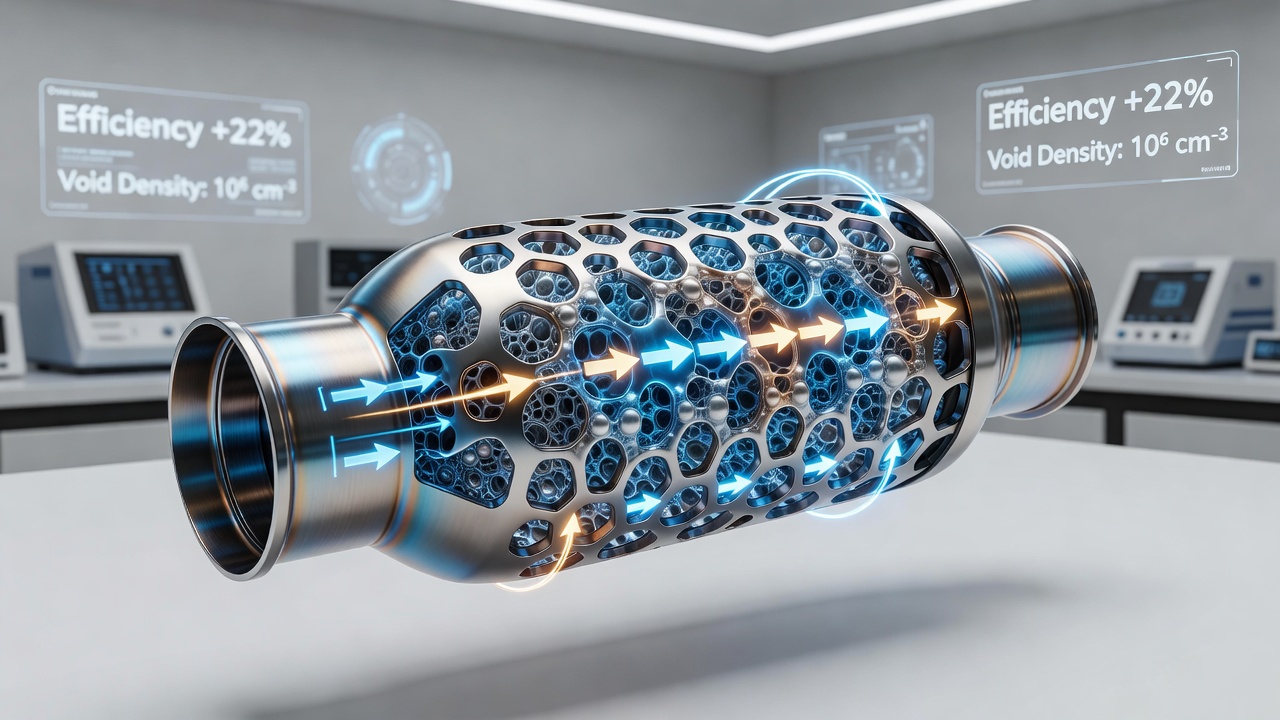
Catalytic converters rely on platinum group metals dispersed across high-surface-area supports to convert harmful exhaust gases into less toxic compounds, and researchers have turned their attention to hollow nanoscale voids because these internal cavities expand available reaction sites without increasing overall material volume. Data from laboratory tests indicate that incorporating voids measuring between five and fifty nanometers in diameter raises active surface area by up to thirty percent compared with solid nanoparticle designs, which allows converters to achieve equivalent conversion rates while using smaller quantities of precious metals. Engineers at several automotive research centers have documented that the voids also improve mass transport because reactant molecules diffuse more freely through the open spaces before reaching active metal clusters.
Material Synthesis and Structural Characteristics
Teams create these hollow features through template-assisted methods where sacrificial spheres are coated with metal oxides and then removed by chemical etching or thermal treatment, leaving behind uniform cavities that maintain structural integrity under high-temperature exhaust conditions. X-ray diffraction studies reveal that the resulting frameworks retain crystalline phases required for thermal stability, while transmission electron microscopy images confirm that void walls remain thin enough to preserve porosity yet thick enough to resist sintering during prolonged operation. According to reports from the U.S. Department of Energy, converters built with such architectures demonstrate reduced light-off temperatures, meaning they reach effective operating conditions more quickly after a cold start and thereby lower cumulative emissions during typical drive cycles.
Performance Metrics and Efficiency Improvements
Measurements taken on engine dynamometers show that vehicles equipped with void-enhanced converters record nitrogen oxide conversion efficiencies above ninety-five percent across a broader temperature window than conventional units, and hydrocarbon oxidation rates improve by fifteen to twenty percent under lean-burn conditions. The same tests indicate that carbon monoxide conversion remains stable even when exhaust flow rates fluctuate, because the internal voids provide additional pathways that prevent localized reactant starvation. European Environment Agency figures released in 2025 highlight similar trends across fleets operating under Euro 7 standards, confirming that design changes at the nanoscale translate into measurable fleet-wide reductions in tailpipe pollutants.
What's interesting is how these structural modifications interact with washcoat formulations, because the presence of voids alters the distribution of ceria-zirconia promoters and thereby enhances oxygen storage capacity during rapid air-fuel ratio swings. Researchers at several institutions have measured oxygen release rates that remain higher throughout aging cycles when voids are present, which helps maintain catalyst activity over the one-hundred-fifty-thousand-mile durability requirement set by regulators.
Integration with Emerging Regulatory and Manufacturing Trends
By September 2026, several manufacturers plan to introduce production vehicles that incorporate these advanced catalytic designs as part of broader strategies to meet upcoming emissions thresholds in both North America and Asia-Pacific markets. Industry reports note that the approach reduces reliance on rhodium and palladium, whose prices have remained volatile, while still satisfying durability and performance criteria established by transport authorities. Supply chain analyses further reveal that template materials used in void formation are now available at scales suitable for high-volume manufacturing, which lowers the barrier for wider adoption across light-duty and heavy-duty platforms alike.
Challenges in Scaling and Long-Term Durability
Although laboratory results appear promising, production teams continue to address variations in void uniformity that can arise during large-scale coating processes, because inconsistent cavity distribution may create zones of reduced activity within individual monoliths. Accelerated aging protocols conducted by independent testing facilities demonstrate that properly engineered voids retain their geometry after exposure to temperatures exceeding nine hundred degrees Celsius, yet some formulations show gradual pore collapse when exposed to certain lubricant additives over extended periods. Ongoing work at academic and industrial laboratories focuses on surface treatments that strengthen void walls without sacrificing porosity, and early data suggest that atomic-layer deposition of thin stabilizing layers can extend service life without compromising the efficiency gains already achieved.
Conclusion
Observations across multiple research programs confirm that hollow nanoscale voids represent a practical route toward higher catalytic efficiency in automotive exhaust aftertreatment systems, delivering measurable improvements in conversion rates, metal utilization, and thermal response while aligning with tightening regulatory requirements expected through 2026 and beyond. Continued refinement of synthesis methods and durability enhancements will determine how quickly these designs move from prototype to widespread production use.